This blog attempts to collate various materials in connection with the year 1735.

20080105

Spanish Riding School Vienna


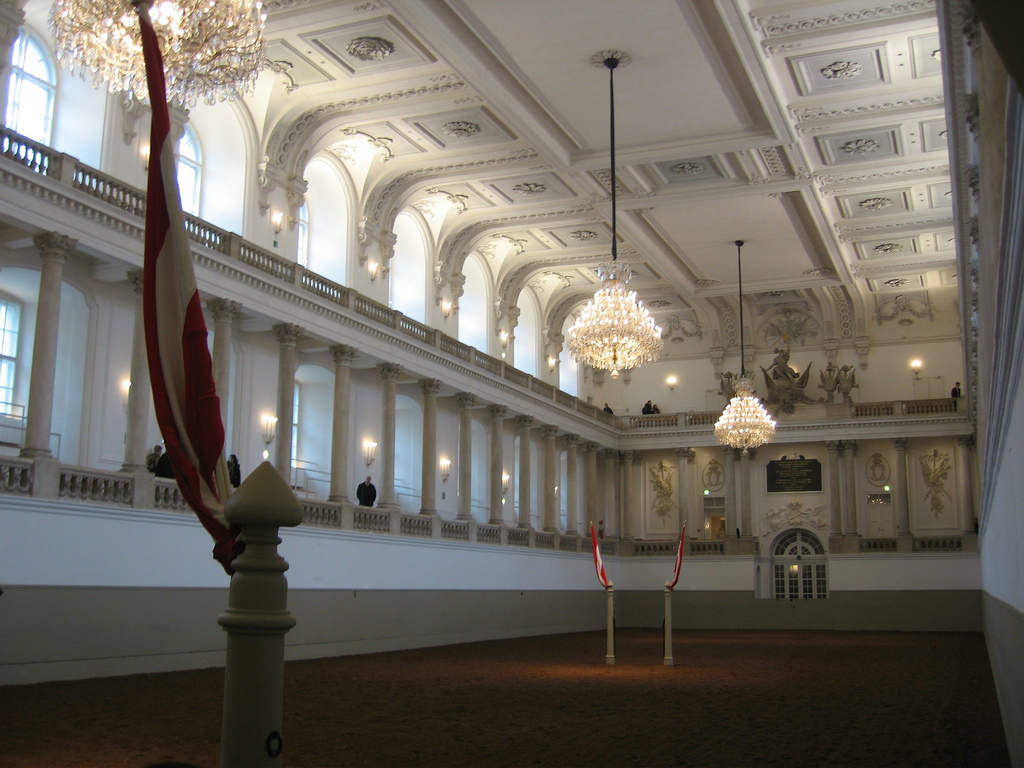
The famous Spanish Riding School in Vienna, Austria, is located in a number of buildings on the Michaelerplatz and the Josefplatz near the Hofburg in central Vienna. Performances take place in the Winter Riding School, an elegant riding hall that was completed in 1735 and was commissioned by the Emperor Charles VI. Prior to that, the School operated from an arena at the Imperial Palace. The Winter Riding School is completely white, with a portrait of Emperor Charles VI above the royal box and opposite the entrance (to which the riders always salute before they ride), and measures 55 by 18 meters and is 17 meters in height.

20080103

Canaletto 03


Giovanni Antonio Canal lived 1697-1768 in Venice. Other Canaletto works around 1735 include
Campo Santa Maria Formosa (in private hands)
Piazza San Marco, Vista hacia San Geminiano (Rome)
El puente Rialto desde el Sur (Rome)
Regata en el Gran Canal, después de (London) [See pic]

Also
Piazza San Marco: Vista sureste (Washington)
Entrada al Gran Canal: Desde el Oeste al Molo (Washington)
El Canal del Brenta en Padua (Washington)

Canaletto 02

Again around 1735, this is Feast of St Roch.

Canaletto


This Canaletto of the Grand Canal can be seen in Cologne and was painted c 1735

Francis Moore

A Voyage to Georgia Begun in the Year 1735 by Francis Moore was published in 1744. The full title is "A Voyage to Georgia Begun in the Year 1735. Containing An Account of the Settling the Town of Frederica, in the Southern part of the Province and a description of the Soil, Air, Birds, Beasts, Trees, Rivers, Islands, &c. With The Rules and Orders made by the Honorable the Trustees for that Settlement, including the Allowance of Provisons, Clothing and other Necessaries to the Families and Servants which went thiter. Also A Description of the Town and County of Savannah, in the Northern Part of the Province; the manner of dividing and granting the Lands and the Improvements there: With an Account of the Air, Soil, Rivers and Islands in that Part. By Francis Moore, Author of Travels into the Inland Parts of Africa. London, 1744". It has been reprinted in modern times and is of antiquarian interest.
It contains the most detailed account of the establishment of Frederica, at that time the southernmost English fort in America. The majority of the settlers were England's "worthy poor", that had been carefully selected by the Trustees, but there were also persecuted German protestants. Moore served at Frederica as Keeper of the King's Stores and as Oglethorpe's Secretary. But conflicts arose between them and Moore returned to England in 1743.

Schenk Ottens map


This map by Schenk Ottens was first published in 1700. This is a reissue of 1735.

20071206

Woodruff House NJ USA


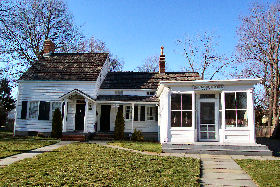
Woodruff House in New Jersy is open to the public. The house was originally built in 1735. More details here.

America

America 1735. The colony of Georgia prohibited importation of African slaves and rum. Settlement there spread to Augusta and John Wesley formed his first Methodist society. A French settlement appeared at Vincennes, Indiana near the Ohio River and St Genevieve on the Missouri River. In New England a Scarlet fever epidemic began. Botulism discovered in German sausages. England is distilling a gallon of gin for every man, woman and child in the nation.

Charity Hospital New Orleans


Nothing being more certain than death, and nothing more uncertain than its hour, being stricken with a dangerous bodily malady, but sane of mind, I desire to settle my affairs, explaining how I intend that my last will be carried out by testamentary executor … a sale shall be made of all that remains, which, together with my small lot, I bequeath to serve in perpetuity to the founding of a hospital for the sick of the City of New Orleans, without anyone being able to change my purpose, and to secure the things necessary to succor the sick.
These words written more than 250 years ago are part of the Last Will and Testament of Jean Louis dated November 16, 1735. Jean Louis, a French seaman who built boats in New Orleans, bequeathed his holdings to the founding and maintenance of Charity Hospital, a hospital for the indigent sick of the colony of New Orleans.
He left 200 Livres to "the poor who are too proud to beg and one hundred livres to procure clothes for the most needy orphans". What ever else he possessed was to go toward founding the hospital. $4,000 was the legacy. Bienville wrote to France that the hospital would be used to put the street beggars to work. A hurricane blew the building down 40 years after being built. The facility was rebuilt (1784) and supported by Don Andres Almonester y Roxas who became its administrator, appointed by the King of Spain and named the Hospice of St Charles in his honour.

20071105

Wesley's Journal 09


[Dec 1735]
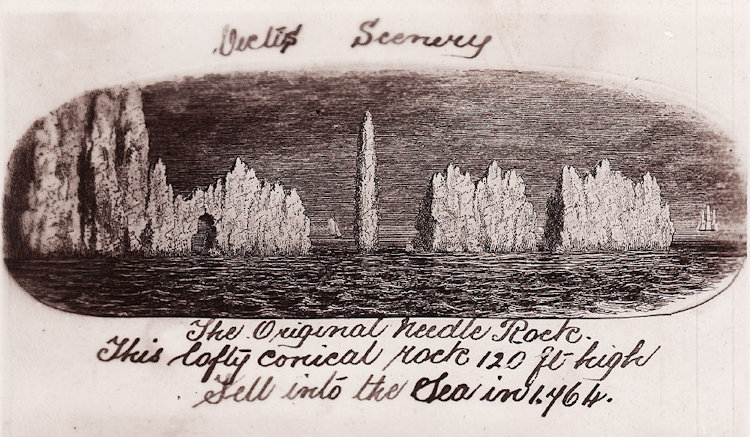
Wednesday 10, We sailed from Cowes, and in the afternoon past the Needles. Here the ragged rocks, with the waves dashing and foaming at the foot of them, and the white side of the island rising to such a height, perpendicular from the beach, gave a strong idea of Him that spanneth the heavens, and holdeth the waters in the hollow of his hand! Today I spoke closely on the head of religion, to one I had talked with once or twice before. Afterwards she said, with many tears, "My mother died when I was but ten years old. Some of her last words were, 'Child, fear God, and though you lose me you shall never want a friend.' I have now found a friend when I most wanted, and least expected one."

From this day to the 14th, being in the Bay of Biscay, the sea was very rough. Mr Delamotte and many others were more sick than ever: Mr Ingham a little; I not at all. But the 14th being a calm day, most of the sick were cured at once.

Thurs. 18, One who was big with child, in a high fever, and almost wasted away with a violent cough, desired to receive the Holy Communion before she died. At the hour of her receiving, she began to recover, and in a few days was entirely out of danger.

Sunday 21, We had fifteen communicants, which was our usual number on Sundays; on Christmas Day we had nineteen; but on New-year's-Day, fifteen only.
Wesley's Journal 08

Tuesday, Dec 2,
I had much satisfaction in conversing with one that was very ill and very serious. But in a few days she recovered from her sickness and from her seriousness together.
Sunday 7, Finding nature did not require so frequent supplies as we had been accustomed to, we agreed to leave off suppers; from doing which we have hitherto found no inconvenience ...

Wesley's Journal 07

[November 1735]
Thursday 20, We fell down into Yarmouth Roads ; but the next day were forced back to Cowes. During our stay here there were several storms; in one of which two ships in Yarmouth Roads were lost. The contrary winds gave my brother an opportunity of complying with the desire of the Minister of Cowes, and preaching there three or four times. The poor people flocked together in great numbers. We distributed a few little books among the more serious of them, which they received with all possible expressions of thankfulness.

Friday 21, One recovering from a dangerous illness, desired to be instructed in the nature of the Lord's supper. I thought it concerned her to be first instructed in the nature of Christianity; and accordingly fixt an hour a day to read with her in Mr. Law's Treatise on Christian Perfection.

Sunday 23, At night I was waked by the tossing of the ship and roaring of the wind, and plainly shewed, I was unfit, for I was unwilling to die.