This blog attempts to collate various materials in connection with the year 1735.

20081211

Marriage of Grimshaw

The great Haworth Methodist preacher William Grimshaw was an unconverted clergyman in 1735. He had already come under the conviction that would lead eventually to his conversion. His realisation of his lack of spirituality was a first step on the road to change. At this time he was trying to reform his life and began to urge his congregation to lead moral lives. He started praying four times a day, a practice he would continue after his conversion. But as he later admitted, all of this was but an earnest “working out a righteousness of his own,” in which he tried to balance the sins of his life with good deeds.
He went on like this for seven years (1734-1741). Sometimes, though, the futility of trying to trying to find salvation through the pathway of good works would overwhelm him and he would cry out in the middle of a service: “My friends, we are in a damnable state, and I scarcely know how we are to get out of it.” He was beginning to realise, in the words of one of his biogrpahers Frank Baker, that “he could not put himself right with God by a multitude of devotional exercises, however arduous.”
In 1735 he married a widow named Sarah Sutcliffe (1710-1739). Apparently she came riding by one day and made the oprioposal. He loved dearly but, after she had borne him two children, she died at the very young age of 29. Grimshaw was shattered.
20081205

Sopron University


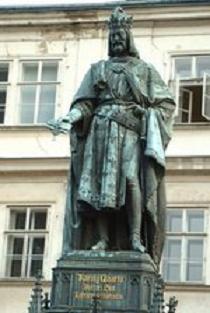
The present University of West Hungary is based in the city of Sopron. It began in its present form at the beginning of 2000. It merges a number of institutions including Sopron University. The legal predecessor of Sopron University was the University of Forestry and Wood Sciences. This institution began as a school, training mining officials and was founded in Selmecbánya by King Charles III (Emperor Charles IV) in 1735.

20081107

Boyne Obelisk


In 1735 (possibly 1736) a 130 feet obelisk was raised 3 miles west of Drogheda, marking the site of the 1690 Battle of Boyne. It is currently in a state of disrepair but some Orangemen are keen to put that right I understand. The painting is from 1757 and is by Thomas Mitchell (Who was born in 1735!).
The inscription read
'Sacred to the glorious memory of King William the Third, who, on the 1st of July, 1690, passed the river near this place to attack James the Second at the head of a Popish army, advantageously posted on the south side of it, and did, on that day, by a single battle, secure to us and to our posterity, our liberty, laws, and religion. In consequence of this action, James the Second left this kingdom and fled to France.'

20081023

Devos China Plates


This fine pair of Chinese Armorial Porcelain Soup Plates with the arms of the deVos family of Holland are currently up for sale. They are dated around 1735.

20081010

Cebu


The Basilica Minore del Sto Niño is the centre of the oldest Romanist devotion in the Philippines. It houses the image of the Sto Niño de Cebu, a representation of the infant Jesus, brought by Ferdinand Magellan in 1521.
Three churches preceded the present one. The first, by Fr Diego de Herrera, made of nipa and wood burnt down, 1566. The next, also of light materials, by Fr Pedro Torres burnt, 1628. The third, of bricks and stones, was started by Fr Juan de Medina. It fell down, 1629.
On February 29, 1735, Fr Juan de Albarran started the construction of what would be the present church using hewn stone. The church was finished, 1739.
The facade blends Muslim, Romanesque and Neo-Classical features. It follows the classical pattern and is divided into two levels. Shallow pilasters divide each story into three segments decorated with stone bas-reliefs representing Augustinian saints. The bell tower serves as counterbalance to the opposite end. A triangular pediment crowns the solid, but not massive, facade. Attention is focused on the centre section. The trefoil arched main entrance is balanced by the side rectangular statued niches. The vertical composition is echoed by the small design on the second level above the cornice, the trefoil arch, the pediment and the side scroll-like ornament, a facade within a facade. A double-edged triangular pediment crowns the facade.

20081009

10 Downing Street


[From Wikipedia]

The home of the British Prime minister, Number 10 Downing Street, was originally three houses. In 1732 King George II offered them to Sir Robert Walpole in gratitude for services to the nation. Walpole accepted on condition they would be a gift to the office of First Lord of the Treasury rather than to him personally. Walpole commissioned leading architect William Kent to join them together. Kent's plan was a masterpiece and this larger house is known today as 10 Downing Street.
Kent joined the larger houses by building a two-story structure on part of the space between them, consisting of a long room on the ground floor and several rooms above. The remaining space was converted into an inner courtyard. He then connected the Downing Street houses with a corridor, now called the Treasury Passage.
Rebuilding took 3 years. On September 23, 1735, the London Daily Post announced that Walpole had moved into Number 10: “Yesterday, the Right Hon Sir Robert Walpole, with his Lady and Family moved from their House in St James’s Square, to his new House adjoining to the Treasury in St James’s Park.”
The Walpole family did not enter through the door now so famous (not installed until 40 years later). However, like Number 10's famous door, Kent's was also modest, belying the spacious elegance beyond. Their new, albeit temporary, home had 60 rooms, with hardwood and marble floors, crown moulding, elegant pillars and marble mantelpieces; those on the west side with beautiful views of St James's Park. One of the largest rooms was a study for Walpole, 40 feet by 20 with enormous windows overlooking St James's Park. The room was and still is magnificent; its impressive size is easily seen in many paintings and photographs (virtual tour here). "My Lord's Study" (as Kent labelled it in his drawings) would later be famous as the Cabinet room where Prime Ministers meet with their subordinate ministers. A portrait of Walpole hangs over the fireplace behind the PM’s chair; the only picture in the room.
The total final cost of Kent's conversion is unknown. The original estimate was £8k but probably exceeded £20k, then a very large sum. The arrangement was not an immediate success. Despite its impressive size and convenient location, few early PMs lived there. Costly to maintain, neglected and run-down, it came close to being razed several times but survived and became linked with many of the great statesmen and events in British history. Gradually, the people came to appreciate its historic value.

20081007

Georgia Map

Future Location of Chatham County, 1735

The area enclosed in red represents the future boundaries of Chatham County. The above map shows what is labeled the "County of Savannah" and is commonly attributed to having been prepared in 1740 in conjunction with the Trustees creating the "County of Savannah" in 1741. However, stronger evidence suggests that the map was based on a sketch James Oglethorpe carried to England in 1734 and was subsequently published in a 1735 report on Georgia's Salzburger immigrants.

Why this map is entitled the "County of Savannah" is not known, though it may have been based on the assumption that the English system of counties would be applied in Georgia. The Trustees had debated a new plan for administering the colony of Georgia for some time, and in April 1741 they divided Georgia into two counties named Savannah and Frederica. The County of Savannah included settlements on both banks of the Ogeechee River, plus all lands northward to the Savannah River.

Source: T.F. Lotter, "A Map of the County of Savannah," 1735


20081003

Chardin 1735


Jean-Baptiste-Siméon Chardin (1699-1779) was an 18th-century French painter. He is considered a master of still life. His most famous work of 1735 is Lady taking tea. It was apparently painted in February 1735. His wife Marguerite Saintard died two months later. From the same time are The Young Sketcher, The School Mistress, The Embroiderer, The House of Cards, Rabbit with Copper Cauldron and Quince, Soap Bubbles and a portrait of Charles Godefroy (1706-1771). We have mentioned before his Boy with a top also of 1735.

20080923

Wesley to his mother

To his Mother
OXON, January 13, 1735
DEAR MOTHER, -- Give my leave to say once more that our folks do, and will I supose to the end of the chapter, mistake the question.
Supposing him changed? Say they. Right: but that supposition has not proof yet – whether it may have: when it has, then we may come to our other point, whether all this be not providence, i.e. blessing. And whether we are empowered so to judge, condemn, and execute an imprudent Christian, as God forbid I should ever use a Turk or Deist.
I have had a great deal of a conversation lately on the subject of Christian liberty, and should be glad of your thoughts as to the several notions of it which good men entertain. I perceive different persons take it in at least six different senses: (1) For liberty from willful sin, in opposition to the bondage of natural corruption. (2) For liberty as to rites and points of discipline. So Mr. Whiston says, though the stations were constituted by the Apostles, yet the liberty of the Christian law dispenses with them on extraordinary occasions. [William Whiston (1667-1752) succeeded Newton as Lucasian Pro­fessor in 1703. The reference is to his book, The Primitive Eucharist Revived; or, an account of the doctrine and practice of the two first centuries. The ' stations' were the fasts: see letter of June 13, 1753, n.] (3) For liberty from denying ourselves in little things; for trifles, 'tis commonly thought, we may indulge in safety, because Christ hath made us free. This notion, I a little doubt, is not sound. (4) For liberty from fear, or a filial freedom in our intercourse with God. A Christian, says Dr. Knight, [James Knight, Vicar of St. Sepulchre's, London. See letter of May 8, 1739.] is free from fear on account of his past sins; for he believes in Christ, and hope frees him from fear of losing his present labor or of being a castaway hereafter. (5) Christian liberty is taken by some for a freedom from restraint as to sleep or food. So they would say, your drinking but one glass of wine, or my rising at a fixed hour, was contrary to Christian liberty. Lastly, it is taken for freedom from rules. If by this be meant making our rules yield to extraordinary occasions, well: if the having no prudential rules, this liberty is as yet too high for me; I cannot attain unto it.
We join in begging yours and my father's blessing, and wishing you an Happy Year. -- I am, dear mother,
Your dutiful and affectionate Son.
To Mrs. Wesley, At Epworth. To be left at the Post-house in Gainsborough. By London.

20080919

Birth of Betty Hemings


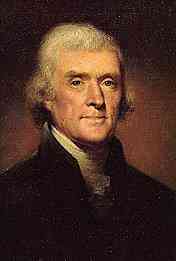
Elizabeth "Betty" Hemings was born around 1735, somewhere west of Monticello, Albemarle County, Virginia, now USA. She was an American slave owned by Thomas Jefferson (see pic), said to have been the concubine of Jefferson's father-in-law John Wayles, from whom Jefferson inherited her and her family. Over 75 of her children, grandchildren and great-grandchildren were enslaved at Jefferson's estate in Monticello.
According to the oral history of her descendants, Betty was the daughter of a slave-ship captain named Hemings and a woman born in Africa. Her place of birth is uncertain, but by the 1740s she was the property of Frances Eppes IV, of the Bermuda Hundred plantation, whose daughter Martha Eppes was to become John Wayles first wife.
Betty's grandson, Madison Hemings, related the story that Betty was already the property of "John Wales" at her birth, and her father Captain Hemings attempted to purchase her from Wayles, but Wayles refused because he was curious about how a mulatto child would develop. Captain Hemings then plotted to kidnap his daughter, which Wayles got word of, and took measures against. This account appears to contradict the documentary evidence pertaining to Betty's birth and early life, though it is possible that Wayles could have sold Betty to Frances Eppes, and later regained ownership of her via the dowry of Eppes's daughter, or that Madison's chronology is incorrect and the incident, if it occurred, happened later.
After the marriage of John Wayles and Martha Eppes 1746, Elizabeth became the property of Wayles, and was moved to one of his plantations, where she became a household servant. In the 1750s she gave birth to the first four of her 12 children, whose paternity is unknown.
John Wayles had three wives, all of whom pre-deceased him. In 1761, after the death of his third wife, Wayles took Betty Hemings as his concubine. According to her descendants, she had six children with Wayles including Sally Hemings (thought to have had a child with Jefferson). Wayles died 1773, and all 11 members of the Hemings family became the property of Thomas Jefferson.
Jefferson gave the Hemingses privileged positions as artisans and household servants. No member of the Hemings family ever worked the field. While resident at Monticello, Betty gave birth to another son, John, whose father was an Irish workman.
Betty had her own home at Monticello, where she spent roughly the last decade of her life, 1795-1807. Hemings sold cabbages, strawberries and chickens to Jefferson while she lived there. Her former cabin is now an archaeological site.

Relationship with John Wayles
Historians have tended to accept the account that Betty Hemings and John Wayles had children together, although, as in the case of many relationships between slave-owners and slaves, documentary evidence is slight. Betty was mentioned in John Wayles will, which some take as an indication of a relationship. Some of Betty's children, according to contemporary accounts, were nearly white. Other support is found in gossip from the first decade of the 19th century, which manifested itself in a few private letters which eventually became public. The accounts of former slaves Isaac Jefferson and Madison Hemings are the most well-known sources for the relationship.

(From Wikipedia)

20080913

World's oldest railway bridge


In the memoir of Rev F C Schwartz, apparently there is a record of his being sent by the East India Company as an emissary to negotiate with Haidar Ali in 1779. There mention is made of the Kabini bridge built by Dalvoy Devaraj in 1735 over the river Kabini. Surprisingly, the bridge is intact even now. The structure, built with stones, bricks and sand is 10-12 metres in width and has a narrow gauge rail track (no longer used) and a tarred road. It has been established as the oldest railway bridge in the world. There is currently talk of redeveloping the historic site. The bridge is near Nanganjud in Mysore, Karnataka, India.

20080822

Cricket


(From Wikipedia)
In the 1735 English cricket season, the main county teams in action were Kent, Surrey and Sussex while London and Croydon remained the predominant town clubs.
The county champions were Kent.
Nine match reports are found in Wikipedia here.
The General Evening Post Thu Aug 7 announced a single wicket match the following Monday on Kennington Common involving seven players of the London Club. The game would be three against four with Mr Wakeland, Mr Dunn and Mr Pool against Mr Marshall, Mr Ellis and two others.
Thu Aug 28 death of Edward (aka Edwin0 Stead reported in the Grub Street Journal dated Thu Sep 4. Mr Stead was a noted patron of the game from the mid-1720s and may have been a good player too. He was a Maidstone man who undoubtedly did much to promote the game in Kent. A compulsive gambler, it seems he died in reduced circumstances. One account stated that he died "near Charing Cross" and another that he died "in Scotland Yard".